
At a time when an image can be generated in a matter of seconds, does photographing something that actually exists take on a new kind of value? This is the underlying question raised by Threads of Time: A Journey Through Silk and Lens, an exhibition presented by Lexar and Leica at the Leica Gallery Amsterdam from September 11, 2026.
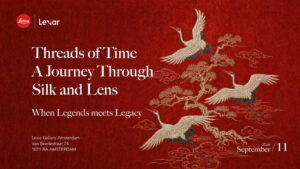
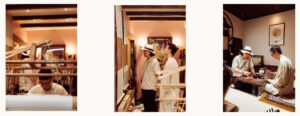
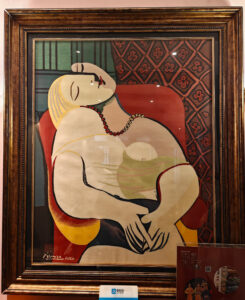
The project takes us into the world of Suzhou kesi, one of the most intricate forms of traditional Chinese silk weaving. Created entirely by hand, thread by thread, the craft requires patience, precision and complete mastery of the material. But rather than simply showcasing the finished works, the exhibition focuses on what comes before: the gestures, tools, textures and time required to create them.
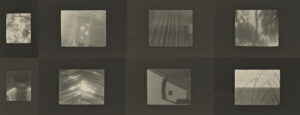
To tell the story of this craftsmanship, Leica-awarded photographer Jing Huang followed Hao Naiqiang, also known as Jingwei, a young artist carrying this tradition forward. Influenced in particular by Chinese ink painting, Huang favours a restrained photographic style built around balance and negative space. His aim is not simply to document kesi, but to visually convey the relationship between the artisan, the material and time itself.
This is also what gives the project particular resonance in 2026. A generated image can reproduce an aesthetic, imagine a workshop or recreate the appearance of a gesture. But it is not a record of a moment the photographer actually witnessed. Threads of Time therefore indirectly raises questions about authenticity at a time when the boundary between a captured image and a created one is becoming increasingly difficult to distinguish.
And this is where Lexar’s involvement takes on its full meaning. Before becoming a print, a publication or an archive, a digital photograph is first an original file that needs to be preserved. In this way, the brand places storage within the broader photographic workflow: capture, transfer, protect and preserve.
Now open at the Leica Gallery Amsterdam, the exhibition ultimately brings together two forms of memory: one of craftsmanship passed down through human hands, and another of a moment preserved through an image. Both point towards the same underlying question: in a world capable of creating ever more content, could value also lie in our ability to preserve what can never truly be reproduced?