
Winter is approaching, temperatures are dropping and heating bills are likely to rise. Bad news for households: as of 1 November 2026, France's benchmark gas price has increased by another 6.6%, according to the French Energy Regulatory Commission (CRE). This marks the third consecutive monthly increase, just as heating systems are being switched back on. For households whose contracts are indexed to this benchmark price, the increase could add around €12 to their November bill alone, on average. Enough to put energy savings firmly back on the agenda.

But how can you reduce consumption without sacrificing comfort? One answer lies in smarter heating management. Scheduling temperatures around daily routines, avoiding heating unoccupied rooms or temporarily turning off radiators when a window is open: these are all simple measures that smart thermostats can automate.

With its @tado° X range, the German smart heating specialist is focusing on precisely this approach. Its smart radiator thermostats allow users to adjust temperatures room by room, while the app makes it easier to schedule and monitor heating. AI Assist features take things further, including geolocation-based control to adapt heating when nobody is home and automatic open-window detection. According to a study carried out by the French Scientific and Technical Centre for Building (CSTB) for IGNES, certain connected heating control systems can deliver energy savings of up to 30% under specific conditions. An interesting potential benefit, although actual results naturally depend on the property, its insulation and heating habits.
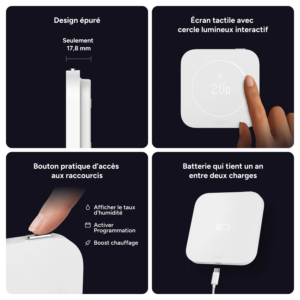
tado° also offers its second-generation Smart Thermostat X, compatible with Matter and Thread, featuring an LED display, touch controls and a USB-C rechargeable battery. Its Starter Kit has an announced price of €179.99. With energy prices remaining difficult to predict, managing heating more efficiently is becoming a practical way to keep costs under control. Because the cheapest heating is often the heating you don't need to use in the first place.