
We're being promised ever more powerful artificial intelligence, GPUs capable of staggering performance and gigantic data centres to keep it all running. Wonderful. But has anyone stopped to think about the electricity bill?
Behind the spectacular demonstrations of generative AI lies a far less glamorous reality: all that computing power consumes enormous amounts of electricity and resources. And unlike the performance figures announced by tech giants, energy capacity doesn't double every two years. The numbers are already staggering. According to the International Energy Agency (IEA), data centres consumed approximately 485 TWh of electricity in 2025. That figure could reach 950 TWh by 2030. Almost double in just five years!
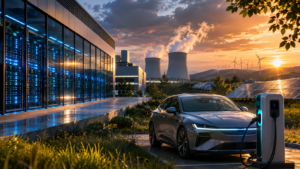
And that's only part of a problem that goes far beyond simply generating more electricity. We also need to be able to deliver it where it's needed. Locally overloaded power grids, lengthy grid connection delays, growing cooling requirements, an ever-increasing number of GPU-powered servers… The race for artificial intelligence is now running into some very physical constraints. Quite a delicious paradox for an industry that has spent years selling us an increasingly virtual world.
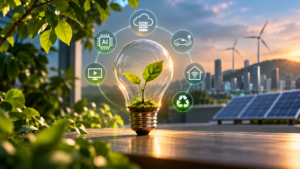
Of course, AI isn't solely responsible. Electric vehicles, rising household demand and the electrification of buildings and industry are also contributing to growing electricity consumption. But one increasingly uncomfortable question is emerging: what's the point of building ever more powerful computing infrastructure if the energy required to run it becomes its biggest limitation, not to mention the environmental cost? Tomorrow, the competition could shift to an entirely different battleground. Chip optimisation, cooling efficiency, energy consumption per computation, environmental footprint, energy storage and access to reliable electricity could become just as important as raw computing power. For decades, tech giants have told us that the future belongs to those who can compute the fastest. Now, one thing is becoming increasingly clear: the future may belong to those who can compute more efficiently while consuming less.